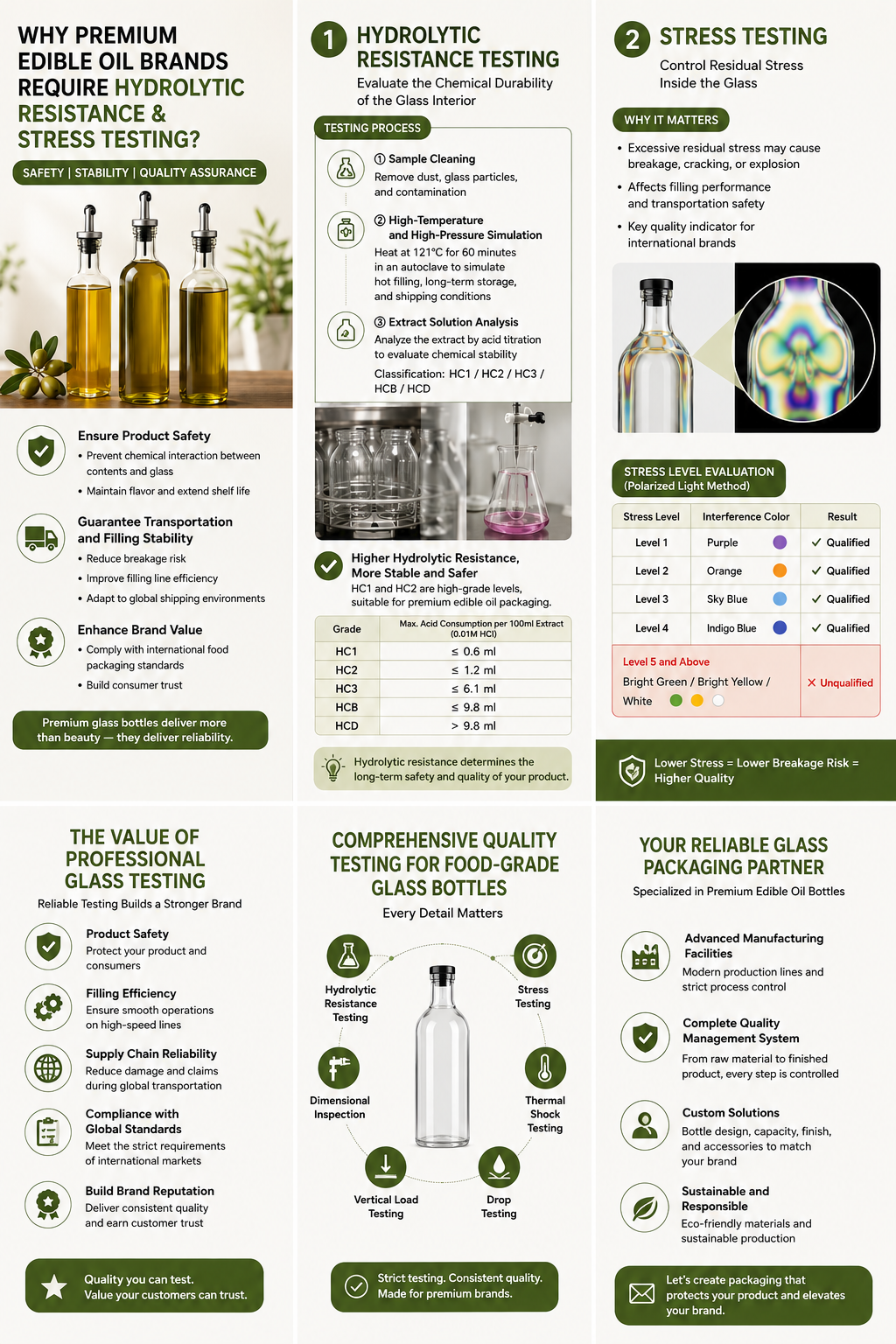
Why are international brands placing greater emphasis on glass bottle testing for edible oil packaging? This article explains how hydrolytic resistance testing and stress inspection help reduce transportation damage, filling-line failures, and food safety risks. Learn how premium brands evaluate food-grade glass packaging suppliers based on quality stability, international testing standards, and long-term supply reliability.
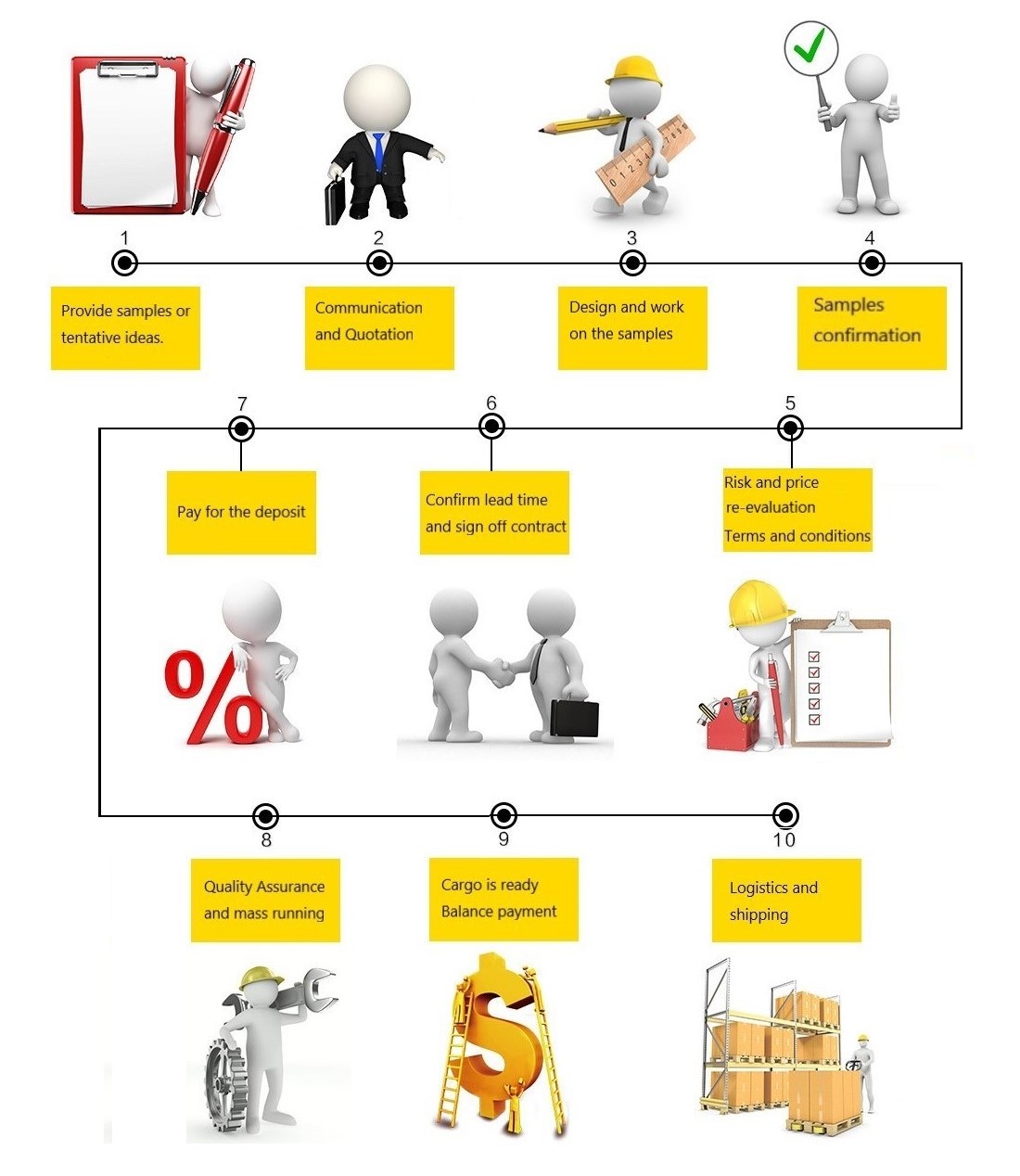
Custom glass bottles are often considered complicated and expensive, but most project failures actually come from misunderstandings of the process. This guide explains the key aspects of glass bottle customization, including OEM vs. ODM, customization options, mold development, MOQ, and lead times. It also highlights common mistakes buyers should avoid when developing custom packaging for food, beverage, and specialty products.
Food‑grade glass goes beyond material choice, involving strict regulations, testing, and quality control to ensure true food‑contact safety. This guide clarifies what defines a food‑grade glass bottle, compares soda‑lime and borosilicate glass, outlines key certifications like FDA and LFGB, and explains safety testing for hot filling and long‑term storage. It offers practical insight to help brands and buyers make safer, more informed packaging decisions.
We frequently encounter clients asking us about 100 questions regarding bottles. Below is a list of the 100 most frequently asked questions in the field of food glass bottles and jars, compiled based on practical experience. It covers multiple dimensions including product specifications, customization, packaging, transportation, certifications, and usage scenarios, helping clients understand us more quickly.
OUR PRODUCTS
OUR SERVICES