



Why Are International Brands Paying More Attention to Glass Bottle Testing
Why Are International Brands Paying More Attention to Glass Bottle Testing?
— Understanding Quality Standards for Premium Glass Packaging Through 'Internal Hydrolytic Resistance' and 'Stress Testing'
In premium edible oil glass packaging projects, international brands are no longer focused solely on bottle design and appearance. Increasingly, they are placing greater emphasis on the safety, stability, and long-term reliability of glass packaging.
Especially for edible oil glass bottles equipped with plastic pourers or dispensers, stricter quality inspections are required to ensure the bottles remain stable throughout transportation, filling, storage, and end-user applications.
For international brands, the stability of a glass bottle directly impacts:
- Product safety
- Filling efficiency
- Ocean shipping reliability
- Customer complaint rates
- Brand reputation
- Long-term supply chain risks
More and more brands are shifting their focus from simply 'comparing prices' to evaluating a supplier's "quality management system." Because what truly determines long-term cooperation is often not the bottle design itself, but rather:
Whether the supplier genuinely possesses the capability to consistently manufacture high-quality glass packaging.
In a recent project we participated in for a well-known international edible oil brand, the customer placed particular emphasis on two critical tests during the early qualification stage:
✅ Internal Hydrolytic Resistance Test of Glass Bottles
✅ Glass Bottle Stress Level Inspection
Many ordinary buyers may focus more on:
- Whether the bottle design looks attractive
- Whether the price is competitive
- Whether delivery can be fast
However, mature international brands care more about one key question:
“Will the product remain stable, safe, and low-risk after it enters the market?”
Because once glass packaging problems occur, the consequences are far more serious than simple product loss:
❌ Full-container breakage during ocean transportation
❌ Production line stoppages during automated filling
❌ Customer complaints
❌ Food safety risks
❌ Damage to brand reputation
This is why more international brands now include glass testing standards as a core part of supplier audits.
1. Why Must Edible Oil Glass Bottles Undergo Internal Hydrolytic Resistance Testing?
1) What Is Internal Hydrolytic Resistance?
Simply put, internal hydrolytic resistance represents the chemical stability of the inner glass surface when it comes into contact with liquids.
If the glass has insufficient hydrolytic resistance, long-term contact with liquid contents may result in:
- Trace ion leaching
- Changes in product flavor
- Reduced shelf life
- Lower stability after hot filling
- Increased food safety risks for the brand
For products such as olive oil, seasoning oil, and premium edible oils, brand owners typically require higher hydrolytic resistance standards.
2) How Strict Is the Testing Process?
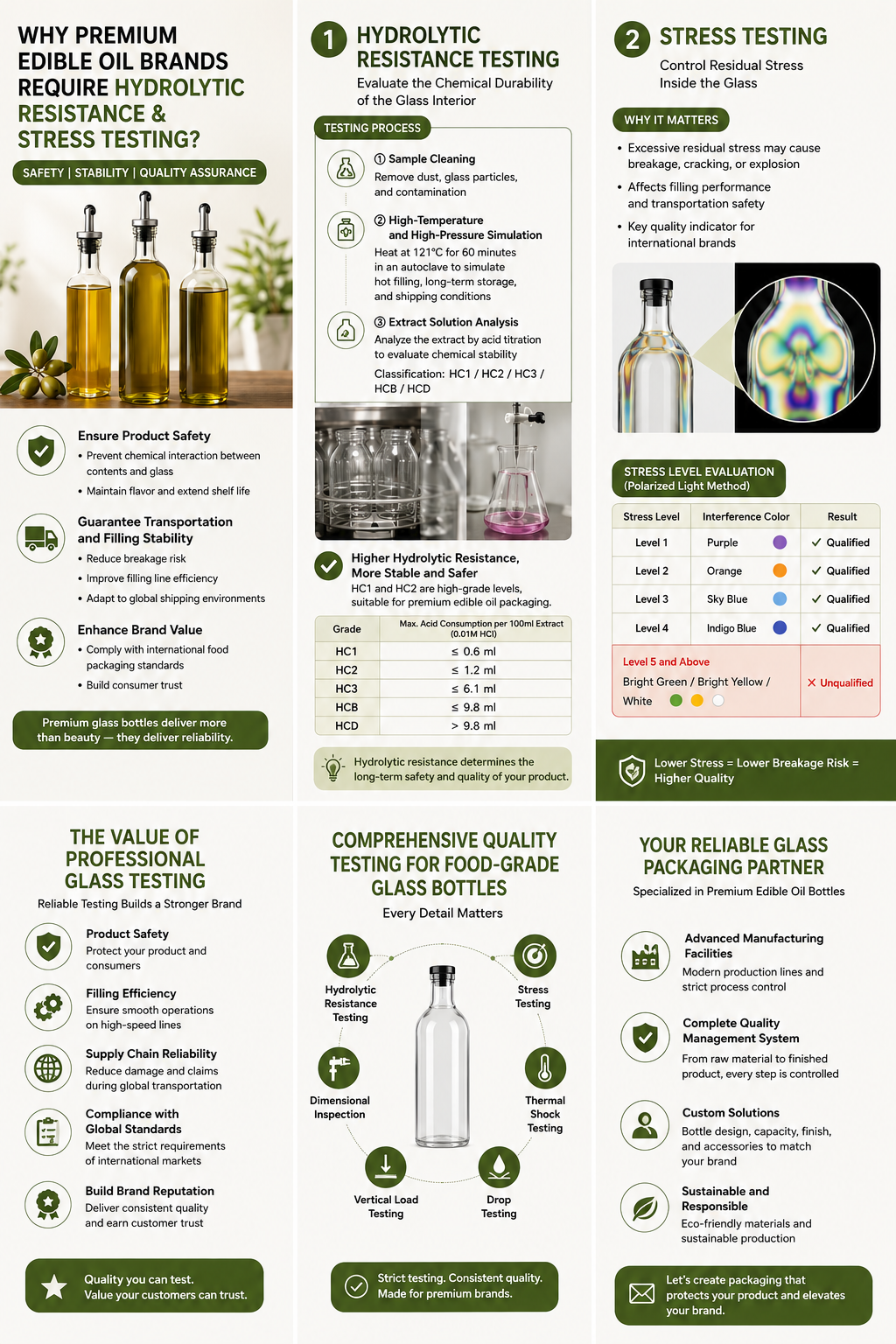
According to the glass packaging industry standard GB/T 4548
“Test Method and Classification for Hydrolytic Resistance of the Interior Surfaces of Glass Containers”:
Glass bottles must undergo the following procedures:
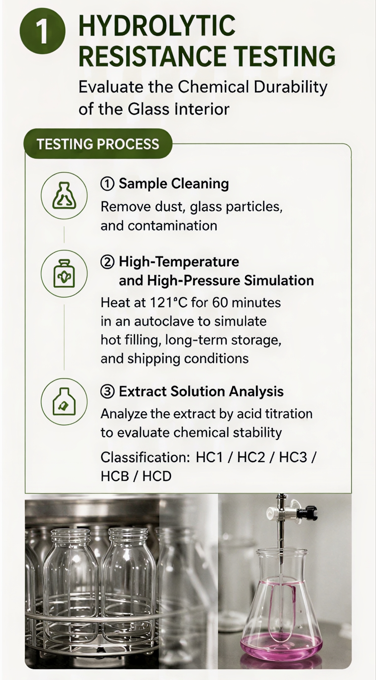
① Thorough Cleaning
All samples must be completely cleaned to remove debris and contaminants that could affect test accuracy.
② High-Temperature and High-Pressure Sterilization Test
After filling the bottles with test water:
The bottles are heated to 121°C in an autoclave
Maintained at that temperature for 60 minutes
Then gradually cooled down
This process simulates:
- Hot filling conditions
- Long-term storage
- International transportation environments
- Temperature fluctuation conditions
This is not a simple laboratory test—it is an early simulation of real-world risks after the product enters the market.
3) How Is Compliance Determined?
After testing, the extraction liquid undergoes titration analysis.
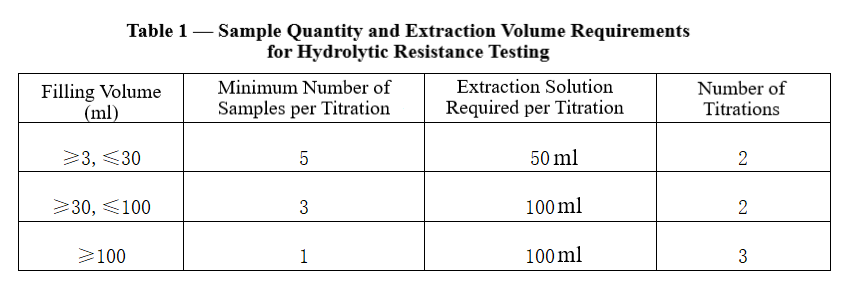
By measuring hydrochloric acid consumption, the chemical stability of the internal glass surface can be evaluated.
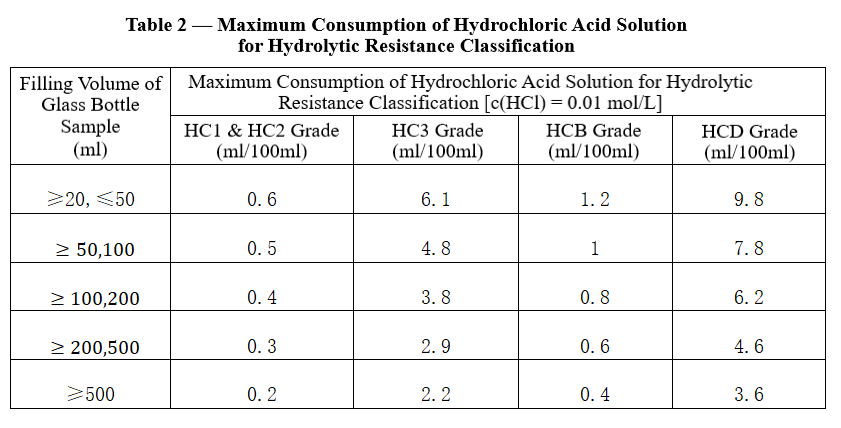
The industry generally classifies results into:
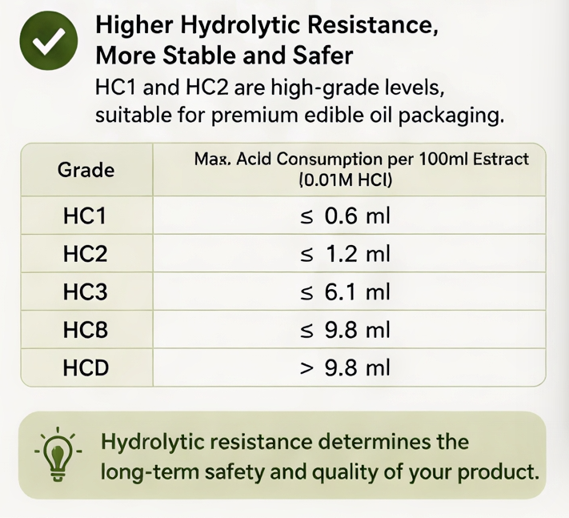
HC1 (Highest Grade)
HC2
HC3
HCB / HCD
Among them:
✅ HC1 and HC2 are commonly used for premium food packaging
✅ The higher the hydrolytic resistance grade, the more chemically stable the glass is
2. Why Must Glass Bottles Also Undergo Stress Testing?
1)What Is Glass Stress?
During manufacturing, glass bottles experience:
High-temperature forming
Cooling and annealing
Surface temperature variations
If the annealing process is insufficient, residual stress remains inside the glass.
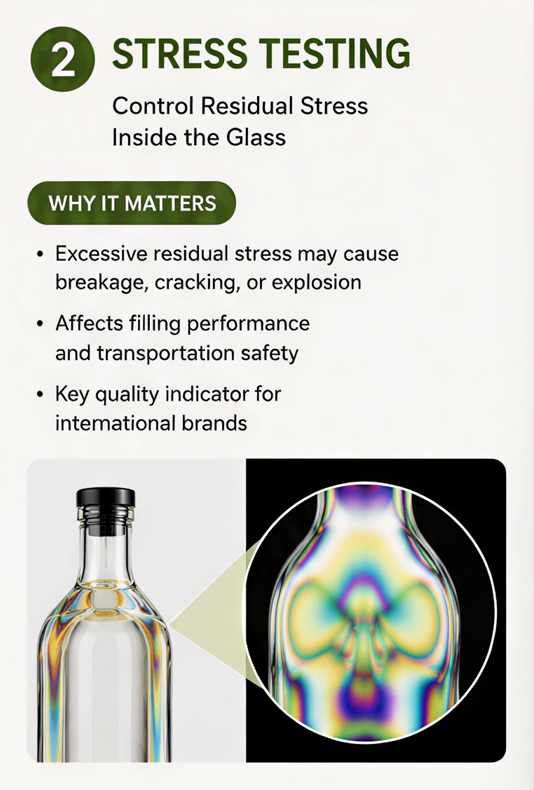
These residual stresses may cause:
❌ Spontaneous breakage
❌ Transportation cracking
❌ Bottle explosions on filling lines
❌ Thermal shock damage
❌ Cracking during use
For export-oriented glass bottle projects, stress control is especially critical.
2) How Is Glass Stress Tested?
The industry commonly uses a Polarimeter for stress inspection.
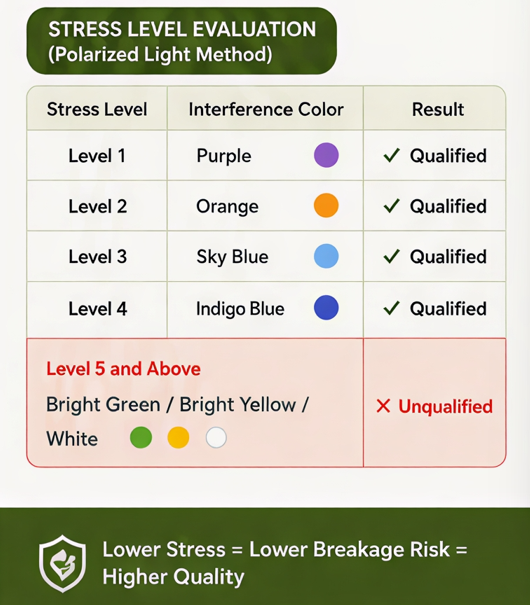
By observing color variations under polarized light, inspectors can evaluate internal stress levels within the glass.
Different colors correspond to different stress grades.
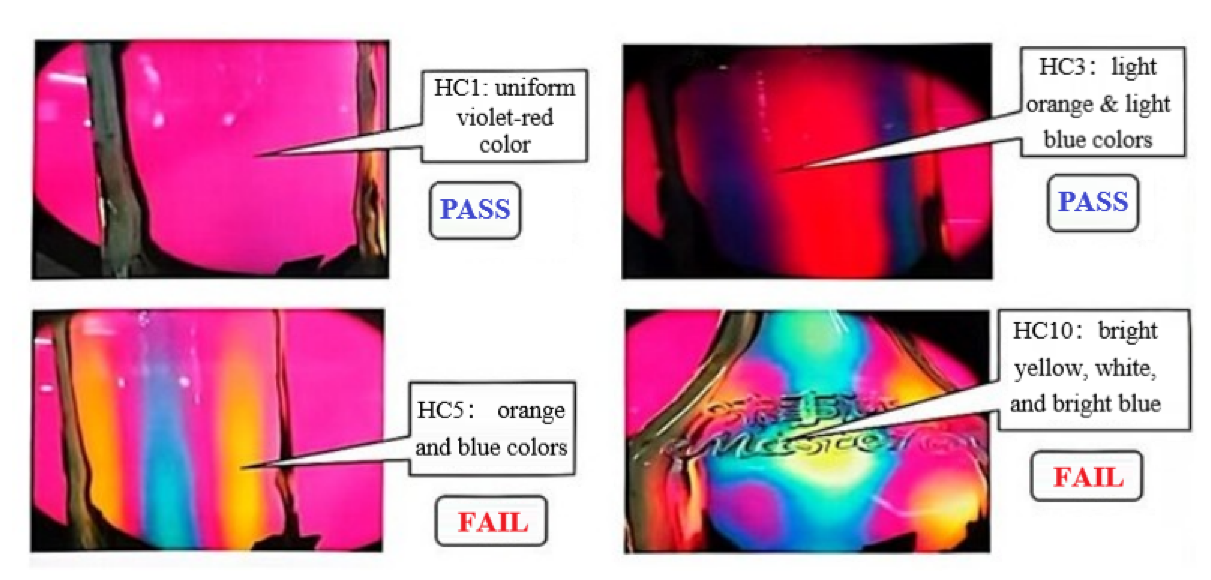
The stress requirement for glass bottles produced by Shining Packaging is:
✅ Stress Level ≤ HC 3
3) Why Do International Brands Pay Special Attention to Stress Levels?
Because premium brands usually involve:
- Global transportation
- Long-duration ocean shipping
- High-speed automated filling lines
- Higher end-user safety requirements
If excessive stress exists inside the glass bottle, it may suddenly crack later—even if the bottle appears visually normal.
Therefore, many international customers require:
✅ Stress level ≤ Grade 3
✅ More stable annealing processes
✅ Stricter online sampling inspections
3. In Premium Edible Oil Glass Packaging, the Real Competition Is “Quality Consistency”
Today’s food glass packaging industry is no longer simply about “holding products.”
What truly determines long-term cooperation is often:
- Batch consistency
- Testing systems
- Quality control capability
- Compliance with international standards
- Long-term supply reliability
Especially for:
✔ Olive oil bottles
✔ Seasoning oil bottles
✔ Pourer oil bottles
✔ Premium food glass packaging
Brands are placing increasing importance on:
“Reducing quality risks at the source.”
4. The Core Value of Premium Glass Packaging Goes Beyond Appearance
A truly high-quality glass bottle should simultaneously provide:
✅ Attractive design
✅ Stable chemical performance
✅ Low residual stress
✅ Good thermal stability
✅ Compatibility with automated filling lines
✅ Suitability for international transportation
This is why more and more international brands carefully evaluate:
- Hydrolytic resistance testing
- Stress testing
- Thermal shock testing
- Vertical load testing
- Drop testing
Because these tests ultimately determine:
✔ Product safety
✔ Brand reputation
✔ Customer satisfaction
✔ Long-term market stability
5. What Truly Matters When Choosing a Glass Bottle Supplier?
For professional buyers:
A low price may determine the first cooperation.
But what truly determines long-term partnership is:
Stable quality + Risk control capability + Consistent delivery capability
A truly reliable glass packaging supplier does more than simply “Sell Bottles". They should also help customers:
- Reduce transportation losses
- Improve filling line stability
- Minimize after-sales risks
- Enhance brand packaging quality
- Meet international food packaging standards
At Shining Packaging, we focus on more than just the glass bottle itself.
We focus on:
How to help our customers' products become more stable, safer, and more competitive in the global market.
For premium edible oil, olive oil, and food packaging projects, we continuously optimize:
- Glass raw material stability
- Furnace control processes
- Annealing processes
- Online inspection systems
- Packaging and transportation solutions
Because we understand:
Truly high-quality glass packaging is not only about looking premium — it must also withstand the challenges of the global supply chain.
If you are looking for more stable and professional food-grade glass packaging solutions, we welcome the opportunity to discuss your project with you.
-
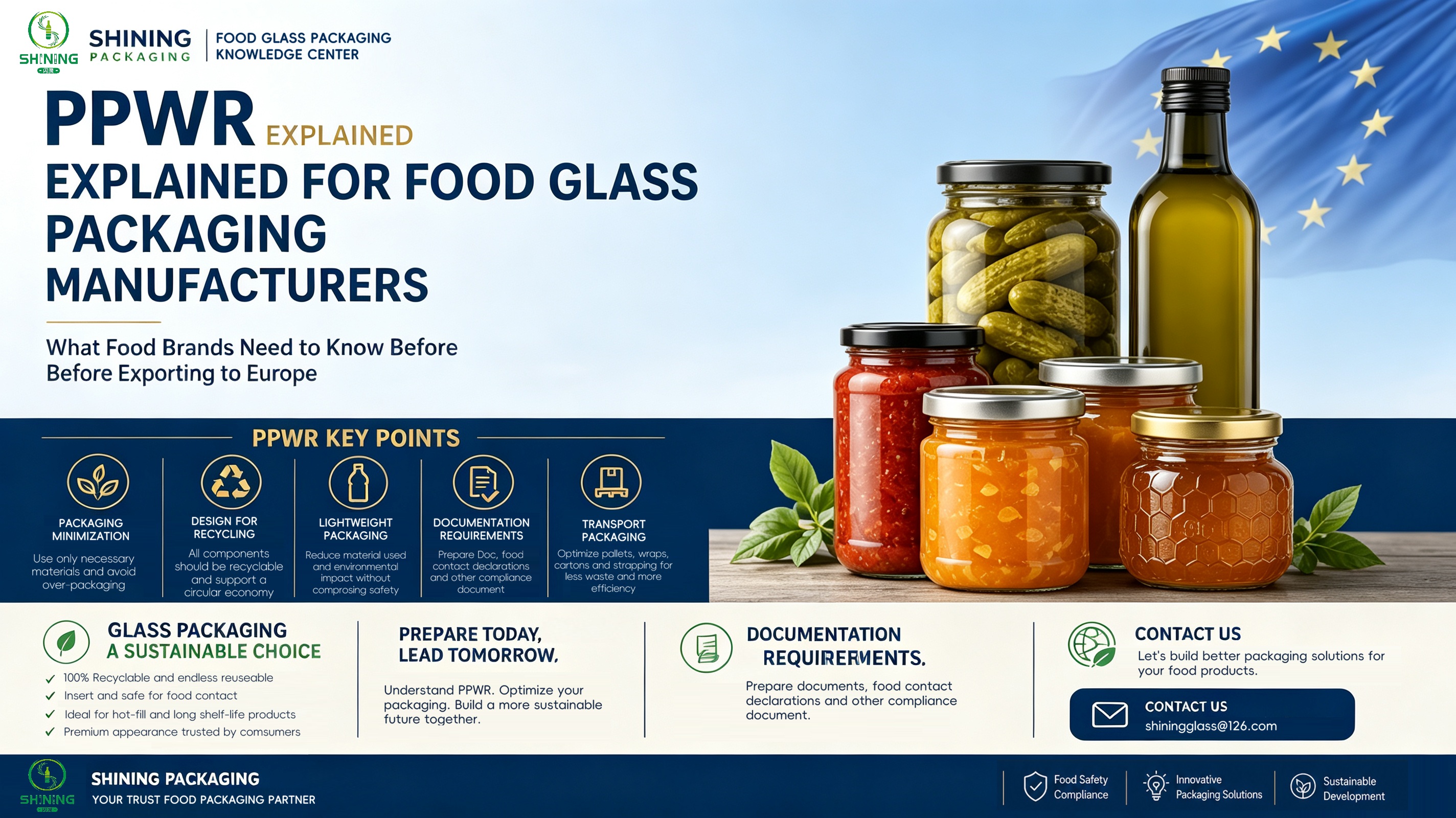
PPWR Explained for Food Glass Packaging Manufacturers | EU Packaging Compliance Guide 2026
Learn how the EU PPWR affects food glass packaging manufacturers. Understand packaging minimization, recyclability, compliance requirements, and practical steps for exporting food products to Europe.
넶0 2026-07-22 -
Low MOQ Glass Bottles | Shining Packaging - Flexible Glass Packaging Supplier in China
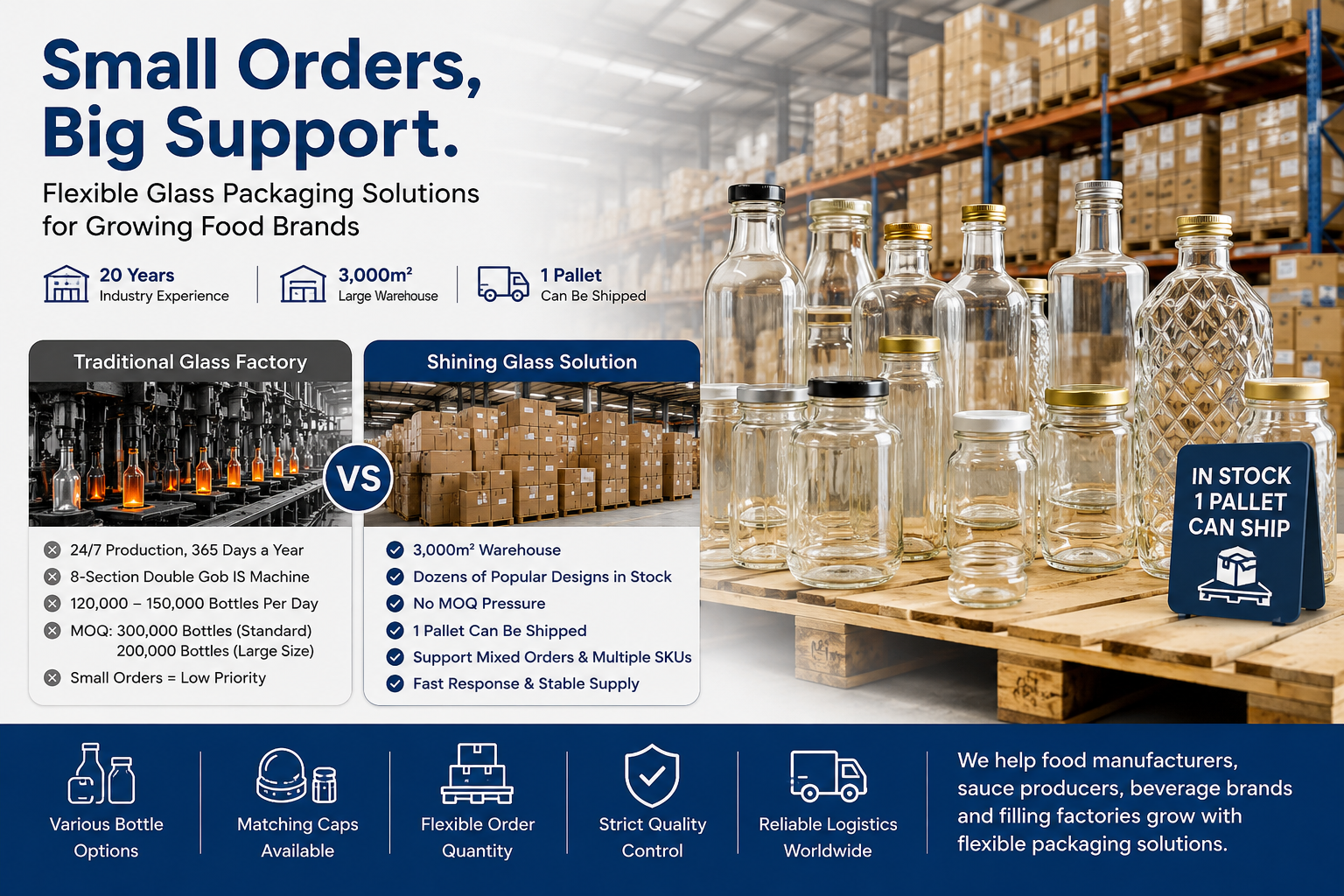
Finding a reliable glass bottle supplier isn't just about price—it's about flexibility. Discover why traditional glass factories require high MOQs and how Shining Glass helps food manufacturers, beverage brands, and filling factories with low MOQ solutions, ready-stock glass bottles, matching caps, and one-pallet shipping backed by over 20 years of industry experience.
넶8 2026-07-08 -
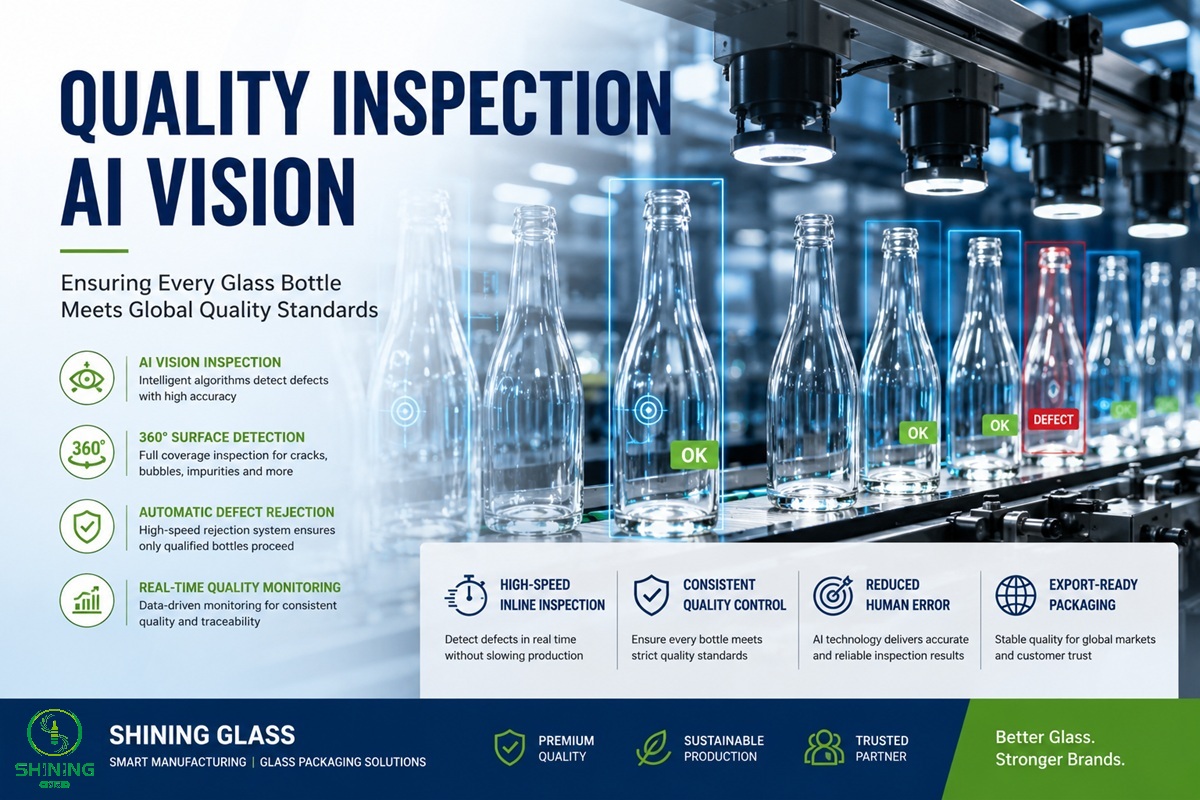
How AI Vision Inspection Helps Brands Protect Product Quality and Consumer Trust
Why do global brands place such a strong emphasis on glass bottle quality inspection?
A flawless bottle is more than attractive packaging—it protects product safety, improves filling efficiency, and safeguards brand reputation. Discover how AI vision inspection helps identify defects in real time, ensuring consistent quality, reducing supply chain risks, and delivering reliable glass packaging solutions for food, beverage, and spirits brands worldwide.넶11 2026-07-02 -
Why Are International Brands Paying More Attention to Glass Bottle Testing
Why are international brands placing greater emphasis on glass bottle testing for edible oil packaging? This article explains how hydrolytic resistance testing and stress inspection help reduce transportation damage, filling-line failures, and food safety risks. Learn how premium brands evaluate food-grade glass packaging suppliers based on quality stability, international testing standards, and long-term supply reliability.
넶11 2026-05-13 -
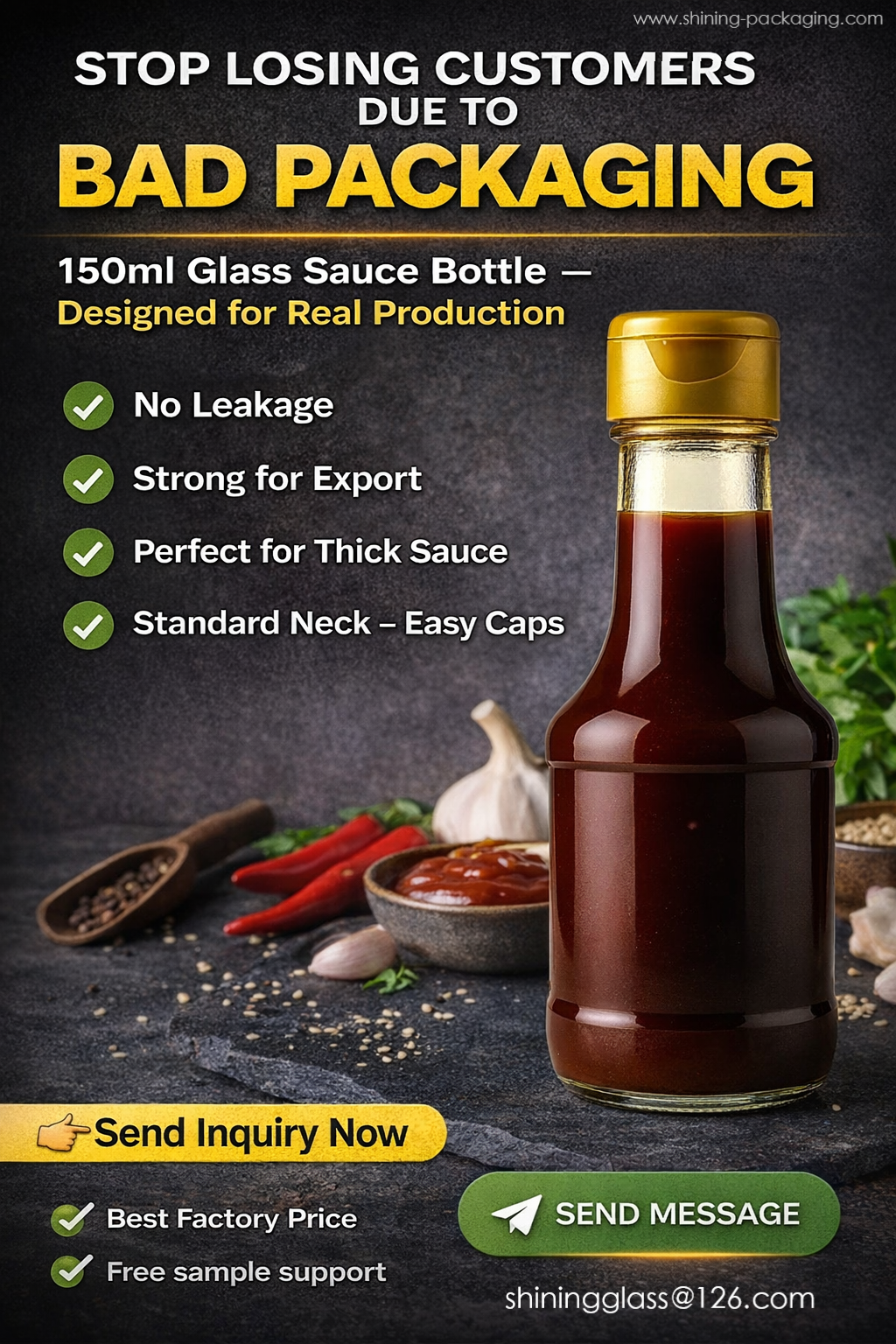
How to Choose the Right Glass Sauce Bottle for Your Product (Complete Guide)
For sauce manufacturers, brand owners, and importers, choosing the right glass sauce bottle is far more than an aesthetic call—it directly shapes production efficiency, shipping safety, shelf appeal, and customer satisfaction. This complete guide breaks down every critical factor: matching bottle design to your sauce type, selecting the right capacity, ensuring neck and production line compatibility etc. Avoid common sourcing pitfalls and pick the perfect bottle for your business.
넶12 2026-04-16